🔥Limited Offer: Get 50% OFFon AI & Full Stack Courses🔥
Back to NumPy Notes
Topic #21

Normal Distribution


Normal Distribution

The Normal Distribution is one of the most important distributions.

It is also called the Gaussian Distribution after the German mathematician Carl Friedrich Gauss.

It fits the probability distribution of many events, eg. IQ Scores, Heartbeat etc.

Use the random.normal() method to get a Normal Data Distribution.

It has three parameters:

loc - (Mean) where the peak of the bell exists.

scale - (Standard Deviation) how flat the graph distribution should be.

size - The shape of the returned array.

Example

  from numpy import random

x = random.normal(size=(2, 3))

print(x)

Example

  from numpy import random

x = random.normal(loc=1, scale=2, size=(2, 3))

print(x)

Visualization of Normal Distribution

Example

  from numpy import random
import matplotlib.pyplot as plt
import seaborn as sns

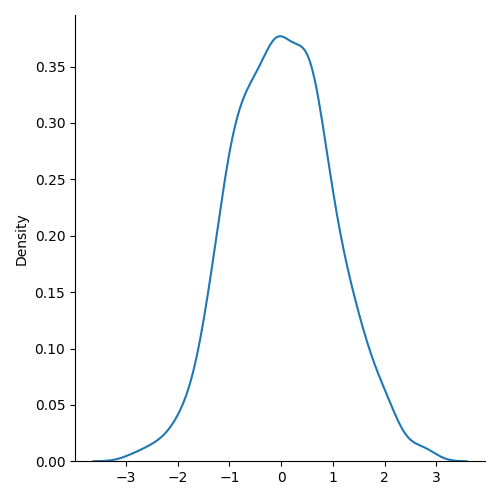
  sns.displot(random.normal(size=1000), kind="kde")

plt.show()
image

Note: The curve of a Normal Distribution is also known as the Bell Curve because of the bell-shaped curve.

Want to go beyond the notes?

Join CodingNow 2.0's NumPy course — live mentorship, real projects, and 100% placement support.

Enroll Now — Free Demo Available

Normal Distribution – FAQs

Quick answers about learning Normal Distribution in NumPy.

This free note from CodingNow 2.0 explains Normal Distribution in NumPy — concept, syntax and worked code examples you can copy, run and revise before interviews.
Yes. Every NumPy topic on CodingNow 2.0, including Normal Distribution, is 100% free with no signup required.
With focused practice, most students grasp Normal Distribution in 1–3 days from these notes; pairing it with CodingNow 2.0's mentor-led course takes you to job-ready depth faster.
Use the code examples in this note, then ask doubts for free on the CodingNow 2.0 Community (/community) — expert instructors answer within 24 hours.
WhatsApp
Call NowEnroll Now